Resins

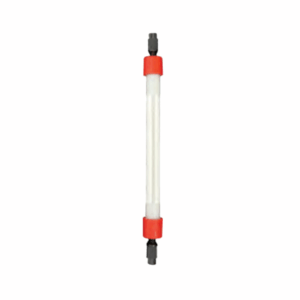
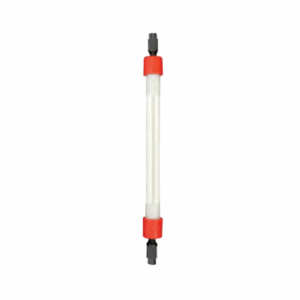
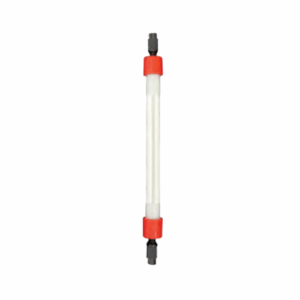
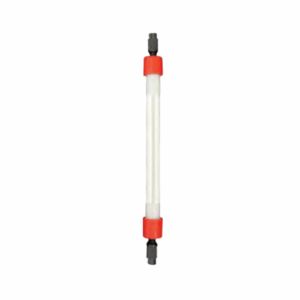
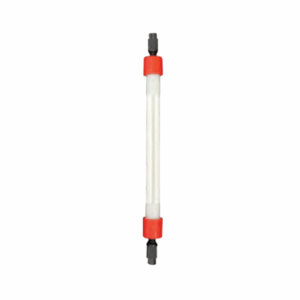
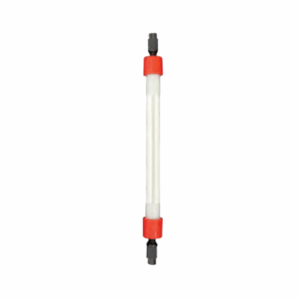
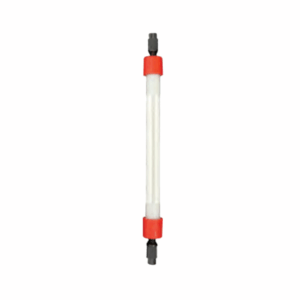
ORF Biologics manufactures chromatography resins for protein purification, from first capture through final polishing. The range covers affinity, ion exchange, hydrophobic interaction, size exclusion, and multimodal resins, built on cross-linked agarose and polymer matrices and supplied as prepacked 5 mL columns for method development and scale-up. Every lot is tested for binding capacity, particle uniformity, pH and chemical stability, and pressure tolerance. Browse by purification step below, or jump to a chromatography type.

Most biologics purifications run two or three chromatography steps. Start with the step you’re developing.

Pull your target out of clarified lysate or harvest with a high-capacity affinity or ion exchange resin.

Separate aggregates, isoforms, and change variants with high-resolution beads.

Remove host cell proteins, nucleic acids, endotoxins, and other process impurities.

Purify plasmid DNA, viral vectors, and biomolecules above 400 kDa.

A resin that behaves differently from one lot to the next costs you a revalidation. ORF Biologics chromatography resins are tested lot by lot so performance holds across repeated cycles and scales.

Tested Binding Capacity — Dynamic binding capacity verified on every lot, from ≥10 mg GST/mL on glutathione resin to ≥70 mg IgG/mL on Protein A.

Broad pH & Chemical Stability — Chemical Stability Operating ranges to pH 2–13 on most grades, with clean-in-place in up to 1 M NaOH.

Uniform Agarose Beads — Cross-linked 4% and 6% agarose beads at 45–165 µm for fast-flow grades and 24–44 µm for high-performance grades.

Pressure Tolerant — Rated to 0.3 MPa (3 bar) for fast-flow agarose, higher for polymer-based Noverose and HN Shell grades.

ORF Biologics makes its chromatography resins in Tiffin, Iowa, with documentation that supports use from research through GMP manufacturing. Resins ship in 20% ethanol and store at 2–8°C.